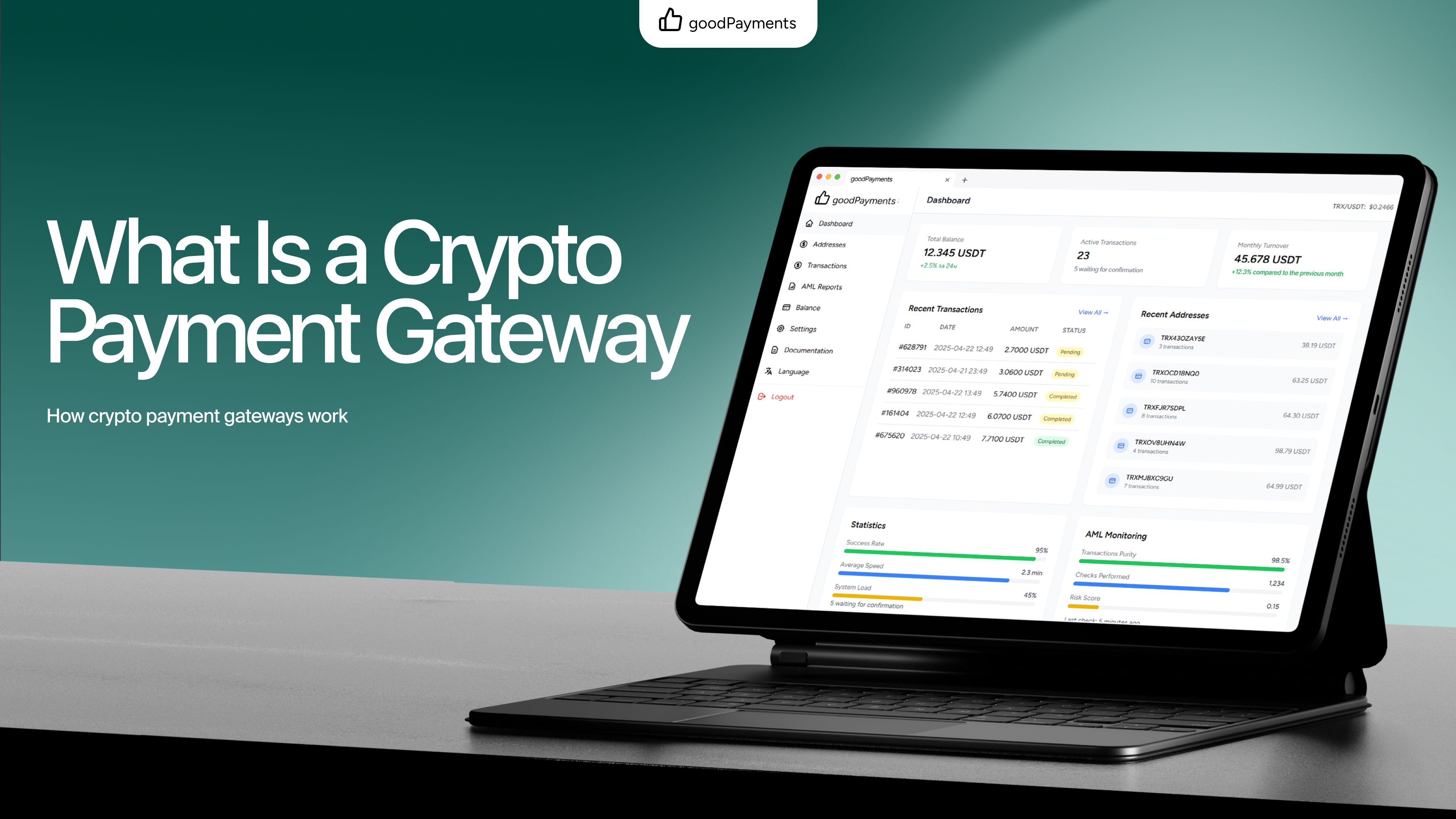
What is a crypto payment Gateway? (Complete guide for businesses)

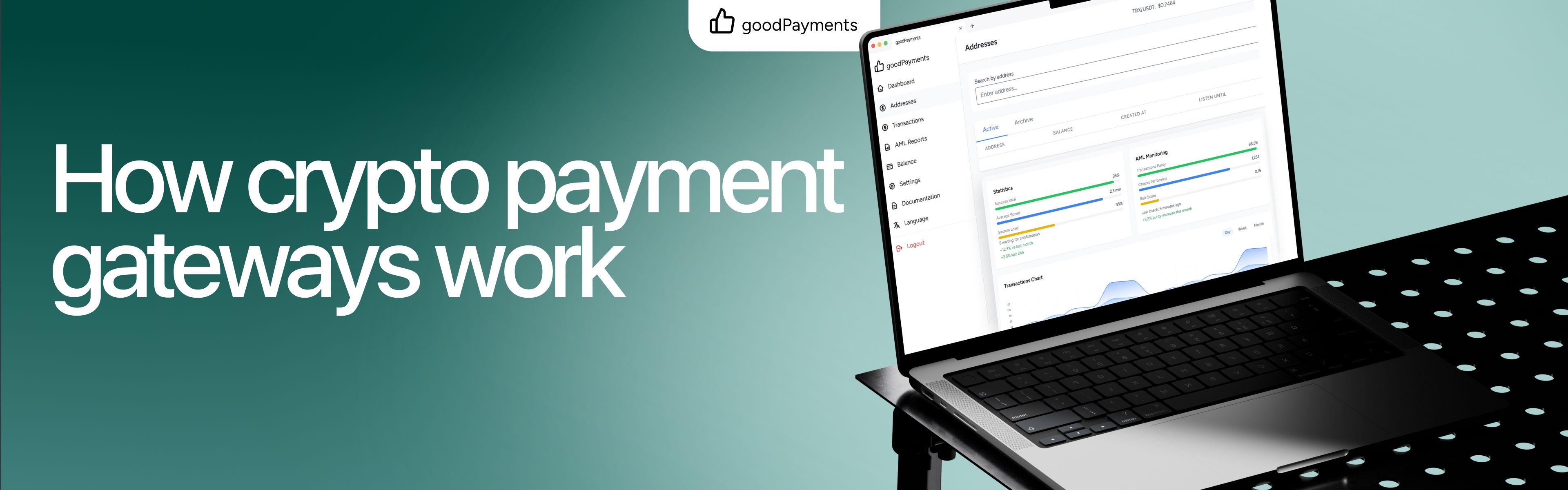
How crypto payment gateways work
A crypto payment gateway is a tool that allows businesses to accept cryptocurrency payments from customers and receive funds through blockchain networks.
Instead of relying on banks or card processors, crypto gateways connect your checkout directly to a blockchain transaction.
In a typical flow:
- A customer selects crypto at checkout
- The system generates a payment request
- The customer sends funds (e.g., USDT)
- The transaction is confirmed on the blockchain
- The business receives funds
Depending on the provider, funds are either held by the platform (custodial) or sent directly to your wallet (non-custodial).

Differences between crypto and traditional payments
Crypto payment gateways solve many limitations of traditional payment systems.
Here’s how they compare:
Traditional payments:
- 2–5% transaction fees
- Delays and chargebacks
- Bank approvals and restrictions
- Limited global access
Crypto payments:
- Lower and predictable fees
- Fast settlement (often minutes)
- No intermediaries or banks
- Borderless transactions
This shift is why many businesses are exploring crypto as a primary payment method.

Benefits for online businesses
For online businesses, crypto payment gateways offer several practical advantages:
- Lower costs - avoid high percentage-based fees
- Global reach - accept payments from any country
- No chargebacks - transactions are final
- Faster access to funds - no waiting days for settlement
Additionally, non-custodial solutions provide:
- Full control over funds
- No reliance on third parties
This is especially important for businesses operating in restricted or high-risk industries.
Key risks and limitations
Despite the advantages, crypto payments come with considerations:
- Volatility (for non-stable cryptocurrencies)
- User education - some customers are unfamiliar with crypto
- Network selection - fees and speed vary by blockchain
- Irreversible transactions - mistakes cannot be undone
However, many of these risks can be minimized by using:
- stablecoins like USDT
- optimized networks such as TRC20
- simple and clear checkout flows
How to get started with crypto payments
Getting started is simpler than it seems.
Most businesses follow this process:
1. Choose a Payment Solution
Select a gateway that matches your priorities:
- low fees
- non-custodial setup
- fast onboarding
2. Set Up Your Wallet
Create a wallet to receive funds directly.
With non-custodial solutions, you maintain full control over your payments.
3. Integrate Payments
Connect the gateway using:
- API
- payment links
- or checkout integration
Many platforms allow you to start within minutes.
4. Start Accepting Payments
Once integrated, you can accept crypto payments globally without relying on banks.
Where goodPayments fits in
goodPayments is designed as a lightweight, non-custodial crypto payment solution focused on simplicity and efficiency:
- Fixed fee instead of percentage-based pricing
- Direct wallet payments - no custody of funds
- No KYC requirements - instant onboarding
- Optimized for USDT (TRC20) and TRX
- Fast integration - go live quickly
Instead of acting as a traditional payment processor, it gives businesses full control, predictable costs, and fewer restrictions.

Final thoughts
Crypto payment gateways are no longer experimental tools - they are becoming a practical alternative to traditional payment systems.
For businesses looking to reduce costs, expand globally, and stay in control of their funds, crypto payments offer a clear advantage.
With the right setup, accepting crypto can be simple, fast, and highly efficient.
If you want a practical walkthrough, read our guide on how to accept USDT payments.